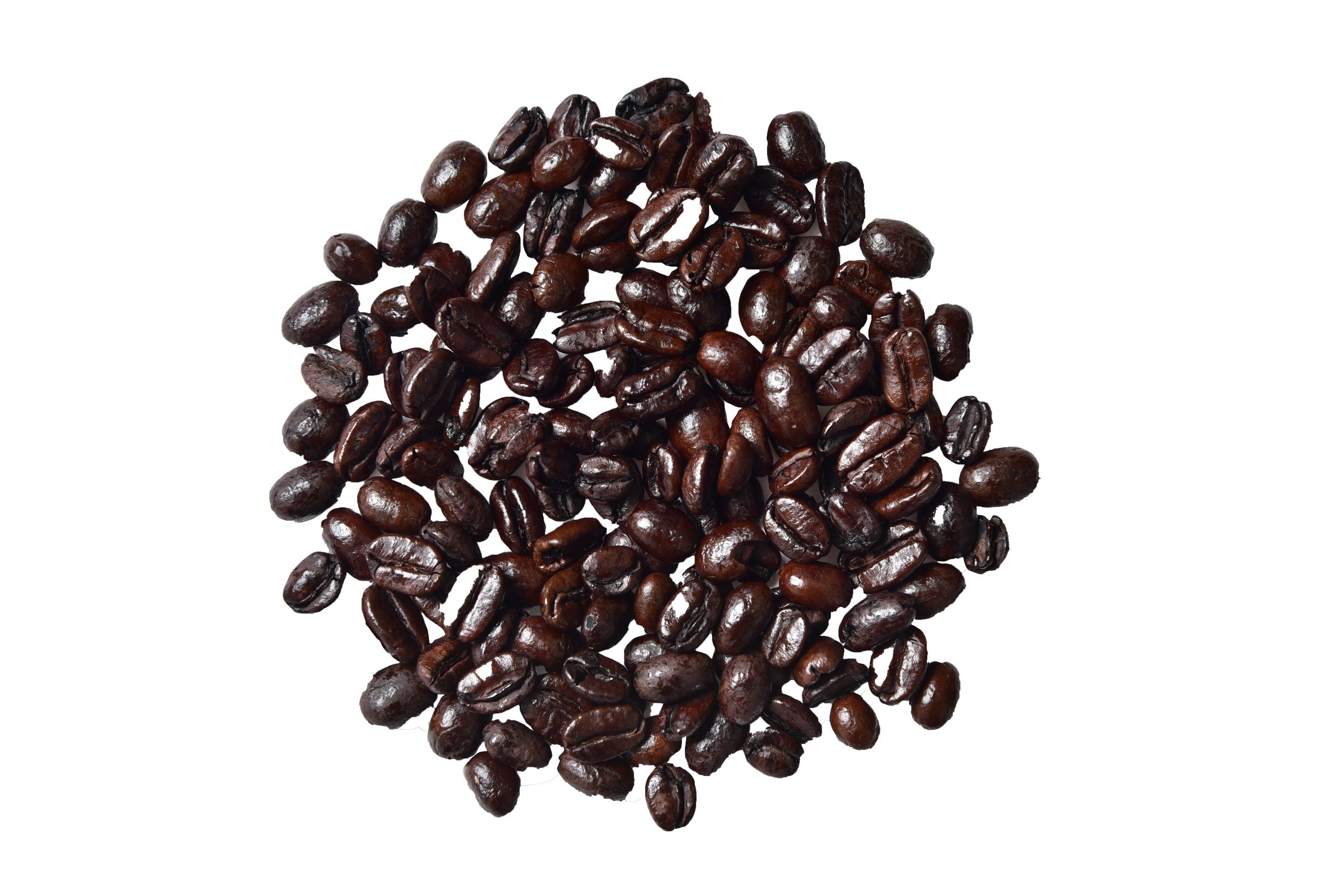
Origin Story
Four Hundred Years, Zero Caffeine
Mocha Java was the blend that happened before blending was a thing. Now Swiss Water Process lets it happen at any hour of the day — same Yemeni fruit, same Javanese earth, same four-hundred-year-old conversation, just without the caffeine.
| Processing | Natural (Yemen) and Washed (Java), Swiss Water® Process decaffeination |
|---|---|
| Roast Level | Medium Dark |
| Decaf | Yes — Swiss Water Process |
Roast Notes
Medium-dark — the same negotiation between Yemeni fruit and Javanese earth, now with Swiss Water decaf. The Yemeni component wants a lighter touch to preserve its wild berry and wine notes; the Java wants enough heat to bring out its chocolate and body. The art is finding the temperature where both are happy, and neither is in charge. Decaffeination happens before roasting and changes none of the calculus
Mocha Java is the world’s oldest coffee blend. It wasn’t designed by a marketing team or focus-grouped into existence. It happened organically, four hundred years ago, when Dutch trading ships carried Yemeni coffee from the port of Mokha and Javanese coffee from the island of Java to the same European coffee houses at the same time. Someone combined them — a merchant, a proprietor, a curious drinker — and discovered that the wild, fruity, wine-like Yemeni coffee and the full-bodied, earthy, chocolate-driven Javanese coffee were better together than apart. The world’s first coffee blend was born. For four centuries, people have been drinking it. And for roughly three and a half of those centuries, nobody who wanted it without caffeine had a good option.
Decaffeinating a coffee like Mocha Java is a higher-stakes proposition than decaffeinating a simpler blend. This isn’t a one-note chocolate bomb where the flavor is bulletproof. The Yemeni component is fragile — all dried fruit and wine-like complexity that disappears at the first sign of heavy-handed processing. The Javanese component is sturdier but nuanced — chocolate, cedar, brown spice, a smoothness that feels inevitable until it’s gone. If the decaffeination process strips anything, you lose the conversation. You get two beans sitting next to each other instead of a blend.
Swiss Water Process is the reason we’re finally offering this. No chemical solvents. No heat that cooks the bean. Just water, temperature, and time — a gentle extraction that removes 99.9% of the caffeine and preserves the volatile compounds that make Yemeni coffee taste like dried cherry and make Javanese coffee taste like chocolate. The process is so precise that the green coffee entering our roaster is functionally identical to the green coffee entering it for the caffeinated version, minus the caffeine molecule. That’s the whole trick.
“Mocha Java Decaf is still a conversation between two coffees from opposite ends of the world. Swiss Water just makes sure nobody has to sit that conversation out.”
In the cup, Mocha Java Decaf delivers everything the original does. Dark cherry and dried fruit open the aroma — the Yemeni component announcing itself first. Then chocolate and cedar, the Javanese foundation. The body is medium-full and smooth. The acidity is balanced and wine-like, not sharp. Brown spice threads through as the cup cools. The finish is long and clean, chocolate-dominant with a whisper of dried fruit. If you’re tasting this blind next to the caffeinated version, good luck telling them apart.
The roast is the same medium-dark negotiation we use for the original. The Yemeni beans need restraint to preserve fruit and wine notes. The Java beans need development to unlock chocolate and body. At medium-dark, dark cherry meets cocoa richness, and neither bean dominates. Decaffeination doesn’t change the roast calculus — the beans behave in the drum exactly as their caffeinated counterparts do.
We’ve been roasting coffee in Lakewood, Colorado under our neighborhood brand, Village Roaster, since 1979. We didn’t invent Mocha Java. Nobody did — it invented itself. But we did wait until the decaf was good enough to carry the name. Some things are worth waiting four hundred years for. A Mocha Java you can drink after dinner is one of them.

